

Pelvic floor weakness happens when the muscles supporting your bladder, uterus, and bowel lose strength or coordination, often after childbirth, with age, or around menopause. It can show up as a heavy or dragging sensation, mild urinary leakage, or a general feeling that something “isn’t quite right” in that area. Pelvic floor muscle strengthening physiotherapy assesses these muscles individually and builds a plan to help restore their strength and function.
This page explains what pelvic floor weakness involves, common signs to look out for, and how physiotherapy-based rehabilitation may help.


The pelvic floor is a supportive sling of muscles at the base of the pelvis. When functioning well, these muscles support the pelvic organs, contribute to bladder and bowel control, and play a role in core stability. Weakness occurs when these muscles lose tone, strength, or the ability to contract and relax effectively. This is different from pelvic floor tightness or overactivity, which involves excess tension rather than weakness — which is why an accurate assessment matters before starting any exercise program.
Many women wonder, “How do I know if my pelvic floor is weak?” Some common indicators include:
Lower back or core instability that doesn't seem to resolve with general exercise, especially by the end of the day
Mild leakage of urine during coughing, sneezing, or exercise
Reduced awareness or sensation when trying to engage the pelvic floor muscles
A sense that pelvic support has changed since childbirth or with age
Lower back or core instability that doesn't seem to resolve with general exercise
These signs vary from person to person, and having them properly assessed is more reliable than trying to interpret them alone.

This is different from pelvic floor tightness or overactivity… which is why an accurate assessment matters, since the muscles stretch significantly to accommodate birth. Weakness can also develop with age, after pelvic or abdominal surgery, with prolonged heavy lifting, chronic coughing, long-term constipation, or during and after menopause, when hormonal changes can affect muscle and tissue support. In many cases, more than one of these factors contributes together, which is why a personal assessment is more useful than general assumptions.
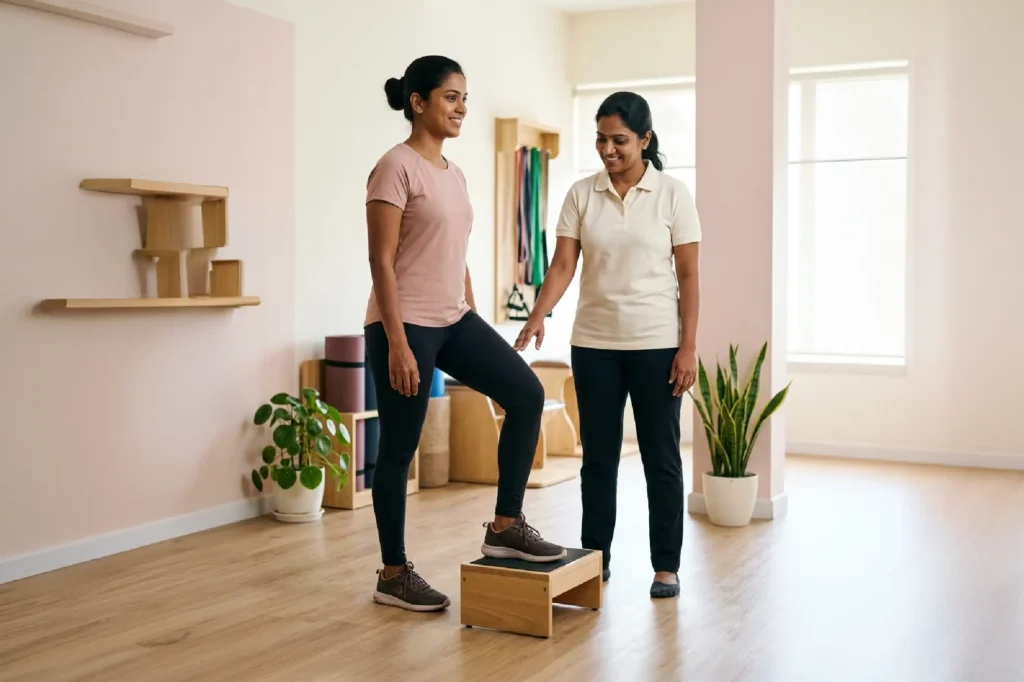

A physiotherapist can assess the strength, endurance, and coordination of your pelvic floor muscles and design a rehabilitation plan based on those findings. This typically involves guided pelvic floor muscle strengthening exercises, breathing and core coordination work, and practical guidance on posture and movement patterns that support pelvic floor recovery. For women recovering after delivery, postpartum pelvic floor recovery physiotherapy is often introduced gradually, taking into account healing timelines and individual readiness. Because everyone’s pelvic floor responds differently, exercises are adjusted based on ongoing assessment rather than following a fixed program.
An initial assessment usually starts with a discussion of your symptoms, obstetric history if relevant, daily activity levels, and any specific concerns you have. Depending on your situation, a physical assessment of the pelvic floor muscles may be recommended to understand strength and coordination more accurately. This is explained clearly beforehand, conducted with attention to your comfort and privacy, and only proceeds with your understanding and consent. You're welcome to ask questions throughout, and treatment pace is adjusted to what feels right for you.
Note: An initial assessment usually starts with a discussion of your symptoms, obstetric history if relevant, daily activity levels, and any specific concerns you have. Depending on your situation, a physical assessment of the pelvic floor muscles may be recommended to understand strength and coordination more accurately. This is explained clearly beforehand, conducted with attention to your comfort and privacy, and only proceeds with your understanding and consent. You're welcome to ask questions throughout, and treatment pace is adjusted to what feels right for you.
An initial assessment usually starts with a discussion of your symptoms, obstetric history if relevant, daily activity levels, and any specific concerns you have. Depending on your situation, a physical assessment of the pelvic floor muscles may be recommended to understand strength and coordination more accurately. This is explained clearly beforehand, conducted with attention to your comfort and privacy, and only proceeds with your understanding and consent. You're welcome to ask questions throughout, and treatment pace is adjusted to what feels right for you.
Signs can include heaviness, mild leakage during coughing or exercise, or reduced sensation when trying to engage the muscles. A physiotherapy assessment can confirm strength and coordination more precisely.
No. While childbirth is a common cause, pelvic floor weakness can also develop with age, after surgery, or due to prolonged strain such as chronic coughing or heavy lifting.
Timing depends on your delivery, recovery, and any medical guidance you've received. A physiotherapist can advise on an appropriate starting point based on individual assessment.
General exercise may help some women, but pelvic floor muscles are often difficult to engage correctly without guidance, which is why a physiotherapy assessment can be useful before starting a program.
While most women seek it for specific symptoms, some choose an assessment preventively, particularly during postpartum recovery or perimenopause.
If you’re noticing signs of pelvic floor weakness or want to understand whether pelvic floor strengthening physiotherapy may help you, you can contact Shakthi Women’s Physiotherapy in Chennai to discuss an assessment.
The information on this page is intended for general educational purposes and does not replace an individual assessment or professional medical advice.
Dedicated to empowering women through specialized physiotherapy care. We provide compassionate, evidence-based treatment for all stages of a woman’s life.
© 2026 Shakthi Women’s Physiotherapy ❤︎ Made with in Chennai
Dedicated to empowering women through specialized physiotherapy care. We provide compassionate, evidence-based treatment for all stages of a woman’s life.


© 2026 Shakthi Women’s Physiotherapy. Made with in Chennai