
Staying active during pregnancy can support strength, comfort, and overall wellbeing, but what’s safe and appropriate changes significantly as pregnancy progresses. A pregnancy exercise physiotherapist assesses your individual health, fitness background, and stage of pregnancy to guide a program that adapts trimester by trimester, rather than applying a generic prenatal workout to every woman.
This page explains what safe exercise during pregnancy involves, how programs are adapted across trimesters, and how a physiotherapist-guided approach may help you stay active and prepare for labour.


Pregnancy brings ongoing changes to posture, joint stability, and center of gravity, all of which affect which movements are appropriate at any given stage. Antenatal exercise physiotherapy takes these changes into account, focusing on maintaining strength and mobility safely rather than pushing intensity. What felt comfortable in the first trimester may need adjusting by the third, which is why an individualized, physiotherapist-guided approach is more useful than a fixed one-size-fits-all pregnancy workout plan.
Many pregnant women have similar questions when it comes to exercise, including:
What are safe exercises during each trimester of pregnancy?
Is it safe to continue an exercise routine I had before pregnancy?
What exercises help prepare for labour and delivery?
How do I know if I should modify or stop an activity?
Can exercise help with common pregnancy discomforts like back pain or swelling?
These are valid, common concerns, and a physiotherapist-guided pregnancy fitness program can address them based on your specific health history and stage of pregnancy.

Each trimester brings different physical considerations. Early pregnancy may involve fatigue and adjusting to initial hormonal changes, while the second trimester often allows for more consistent activity as energy stabilizes. By the third trimester, joint laxity, balance changes, and a growing bump mean certain positions and movements need modification. A pregnancy fitness physiotherapist can guide safe exercises during each trimester of pregnancy, adjusting the program as your body changes rather than keeping the same routine throughout.
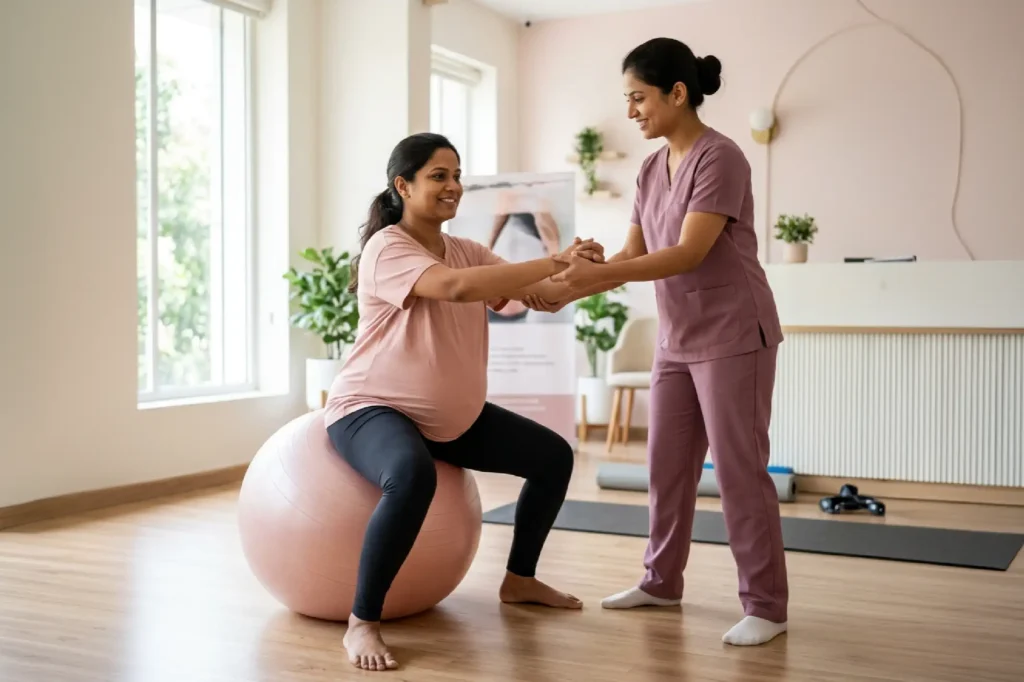

A physiotherapist can assess your current fitness level, any pregnancy-related discomforts, and relevant medical history, then design a program that evolves with your pregnancy. This typically includes posture and core-supportive exercises, safe strength and mobility work adapted to each trimester, guidance on activity modifications as pregnancy progresses, and where appropriate, exercises to prepare for labour and delivery, such as pelvic floor awareness and breathing techniques. Programs are built around your comfort and any medical guidance you’ve received from your obstetrician.
An initial consultation typically involves discussing your pregnancy stage, any pre-existing conditions or pregnancy complications, current activity levels, and specific goals or concerns. A physiotherapist will assess your general movement, posture, and any discomforts before building a program suited to where you are in your pregnancy. Coordination with your obstetrician is encouraged, particularly if you have any pregnancy complications or medical restrictions on activity.
A physiotherapist-guided pregnancy exercise program may be worth considering if you want to stay safely active throughout pregnancy, are experiencing discomforts like back pain that movement may help, are unsure which exercises are appropriate for your trimester, or want structured preparation for labour and delivery.
This varies by individual, but generally includes posture and core-supportive movement in early pregnancy, continued moderate activity in the second trimester, and gentler, more supported movement by the third trimester. A physiotherapist can tailor this to your specific situation.
This depends on your fitness background, pregnancy health, and any complications, and is best discussed with both your physiotherapist and obstetrician.
Pelvic floor awareness, breathing techniques, and certain positional and mobility exercises may be included as part of labour preparation, depending on individual assessment.
General resources can be a starting point, but a physiotherapist-guided program accounts for your specific health history, fitness level, and any pregnancy-related concerns, offering more tailored guidance.
Any new pain, unusual symptoms, or advice from your obstetrician should prompt modification. A physiotherapist can help you recognize when adjustments are needed.
If you’d like guidance on safe, physiotherapist-supported exercise during your pregnancy, you can contact Shakthi Women’s Physiotherapy in Chennai to discuss a program suited to your stage of pregnancy.
The information on this page is intended for general educational purposes and does not replace medical advice from your obstetrician.
Dedicated to empowering women through specialized physiotherapy care. We provide compassionate, evidence-based treatment for all stages of a woman’s life.
© 2026 Shakthi Women’s Physiotherapy ❤︎ Made with in Chennai
Dedicated to empowering women through specialized physiotherapy care. We provide compassionate, evidence-based treatment for all stages of a woman’s life.


© 2026 Shakthi Women’s Physiotherapy. Made with in Chennai