
A C-section involves cutting through several layers of tissue, and as the incision heals, scar tissue can sometimes become tight, tender, or restricted in its movement — even months after delivery. This can contribute to pulling sensations, numbness, or discomfort around the scar, and in some cases, may affect nearby movement or core function. C-section scar physiotherapy uses gentle, targeted techniques to support scar tissue healing and address tightness or adhesions as recovery progresses.
This page explains why C-section scars can cause ongoing discomfort, how scar tissue mobilization physiotherapy works, and what post-C-section physiotherapy treatment may involve.
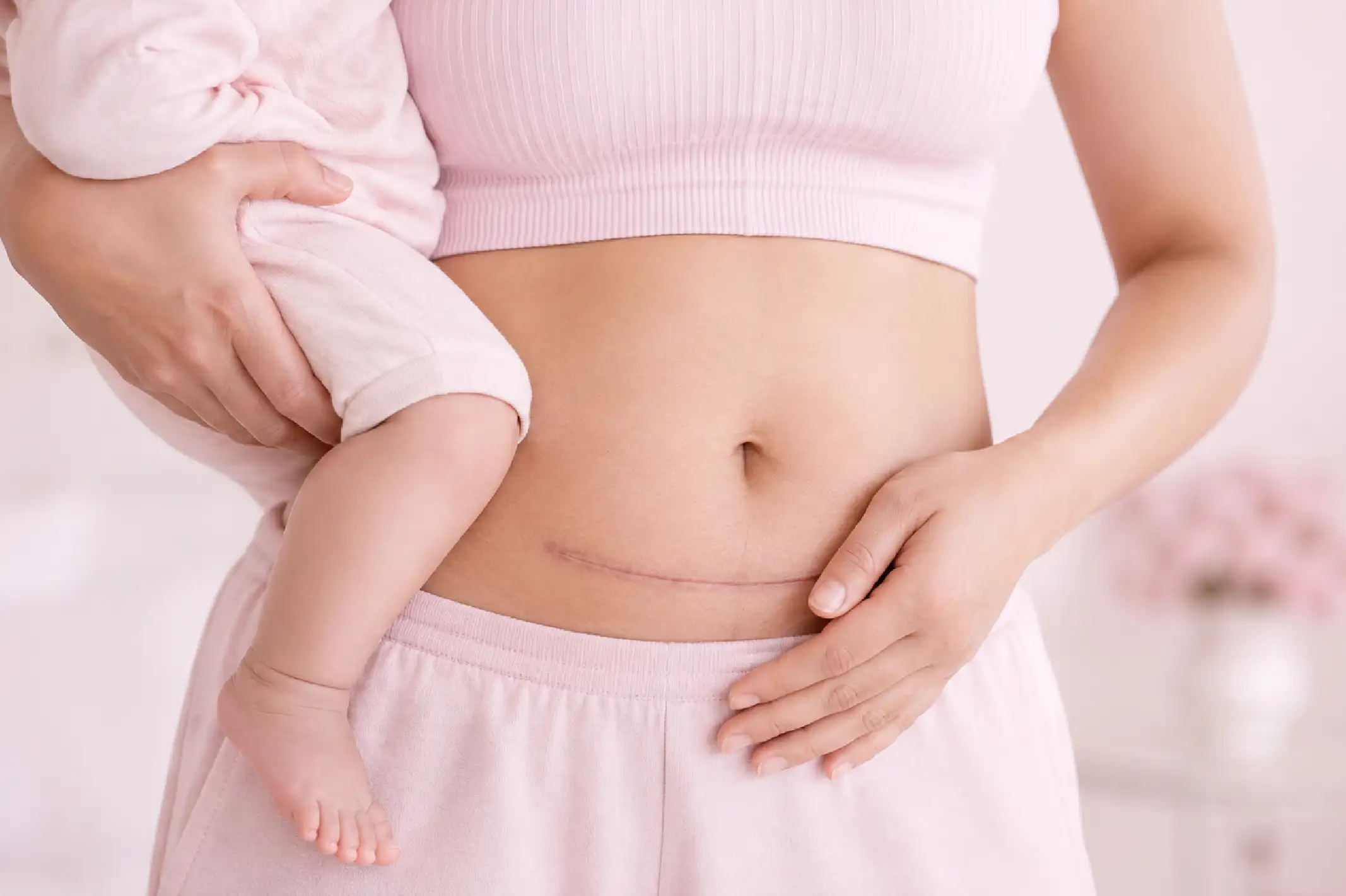

As a C-section incision heals, the body forms scar tissue to repair the cut layers of skin, fascia, and muscle. This scar tissue doesn’t always heal with the same flexibility as the surrounding tissue, and it can sometimes adhere to nearby structures, creating what’s known as an adhesion. This may contribute to a pulling or tight sensation, restricted movement, or discomfort in the area, particularly with certain movements or positions. Not every C-section scar develops noticeable adhesions, but for those that do, physiotherapy can offer a structured approach to addressing them.
Women recovering from a C-section may notice:
Tightness, pulling, or a "stuck" sensation around the scar
Numbness or altered sensation near the incision site
Discomfort with certain movements, such as bending, twisting, or lying on the stomach
Visible or palpable restriction in how the scar tissue moves compared to surrounding skin
Lower abdominal or core weakness that seems connected to the scar area
These experiences are common after C-section delivery, and having them assessed can help clarify whether scar tissue mobilization may be useful for you.

Scar tissue forms as part of normal wound healing, but its structure is different from healthy tissue — it can be less elastic and may bind to deeper layers as it heals, especially if the area wasn’t mobilized during early recovery. Reduced movement in the early postpartum weeks, individual healing patterns, and the depth of the incision can all influence how much adhesion develops. Because everyone’s scar heals differently, the extent of tightness or restriction varies significantly between individuals.
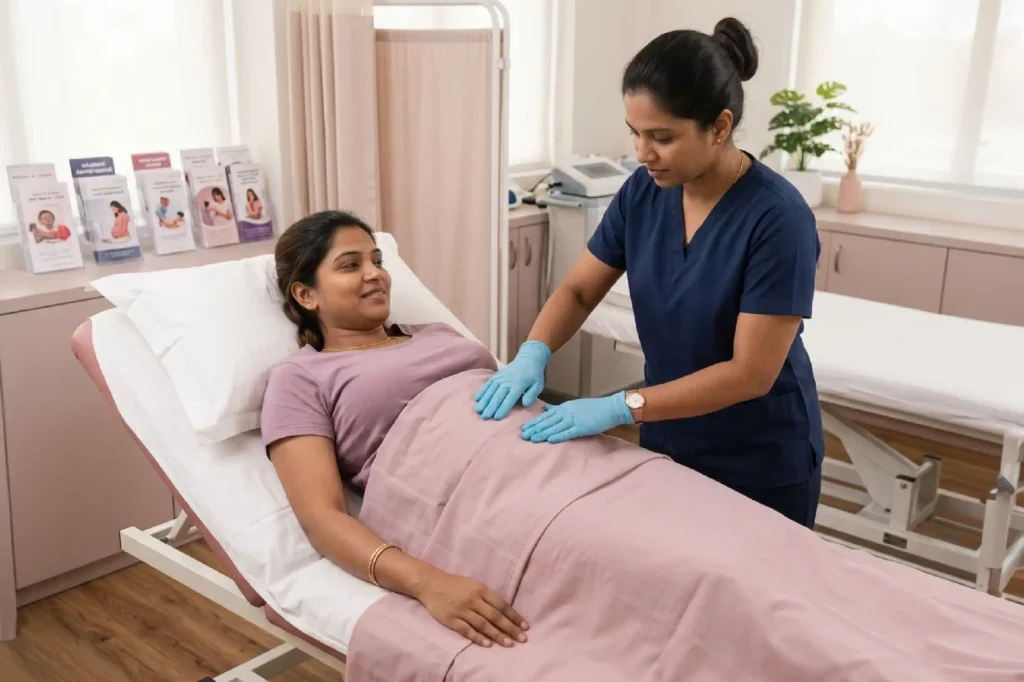

A physiotherapist can assess your scar’s mobility, sensation, and any related movement restrictions, then guide a program based on those findings. Scar tissue mobilization physiotherapy typically involves gentle manual techniques to help improve tissue flexibility, along with guidance on self-massage techniques you may be able to use at home once your scar has sufficiently healed. C-section recovery exercises are also introduced to rebuild core strength and function, coordinated with your scar healing progress rather than a fixed timeline.
An initial assessment typically involves discussing when your C-section was performed, how the scar has healed so far, and any specific symptoms you're noticing. Your physiotherapist will visually and gently assess the scar's mobility and surrounding tissue, always explaining what this involves beforehand and proceeding with your comfort as the priority. Scar work is only appropriate once the incision has sufficiently healed, and your physiotherapist will guide you on appropriate timing based on your individual healing.
C-section scar physiotherapy may be worth considering if you're noticing tightness, pulling, or restricted movement around your scar, experiencing numbness or altered sensation near the incision, or want guidance on exercises after C-section delivery that account for your specific scar and recovery stage.
Scar tissue mobilization techniques, guided by a physiotherapist once your scar has sufficiently healed, may help improve tissue flexibility and reduce restriction. Timing and technique should be individually assessed.
Gentle core reconnection and pelvic floor exercises are typically introduced first, with more targeted scar work and progression added later based on your healing and physiotherapist guidance.
This depends on your individual healing, but scar-specific work generally isn't introduced until the incision has fully closed and healed, which your physiotherapist can help determine.
Not necessarily. Many women find that appropriate scar mobilization and movement can help improve tissue flexibility over time, though individual results vary based on assessment and consistency.
It's possible for scar restriction to be associated with reduced core engagement in the area, which is one reason a combined approach of scar mobilization and core rehabilitation is often used.
If you’re experiencing C-section scar tightness, pain, or restricted movement, you can contact Shakthi Women’s Physiotherapy in Chennai to discuss an assessment suited to your healing stage.
The information on this page is intended for general educational purposes and does not replace an individual assessment or professional medical advice.
Dedicated to empowering women through specialized physiotherapy care. We provide compassionate, evidence-based treatment for all stages of a woman’s life.
© 2026 Shakthi Women’s Physiotherapy ❤︎ Made with in Chennai
Dedicated to empowering women through specialized physiotherapy care. We provide compassionate, evidence-based treatment for all stages of a woman’s life.


© 2026 Shakthi Women’s Physiotherapy. Made with in Chennai