
Pelvic pain can range from a dull ache to sharp, persistent discomfort in the lower abdomen, hips, or pelvic region, and it can appear during pregnancy, after childbirth, following a C-section, or without any obvious trigger at all. Whatever form it takes, ongoing pelvic pain deserves a proper assessment rather than being dismissed as something to simply push through. A pelvic physiotherapist can evaluate the muscles, joints, and movement patterns involved and help identify an appropriate physiotherapy-based approach.
This page explains common patterns of pelvic pain, why it may occur, and how physiotherapy for chronic pelvic pain may help.
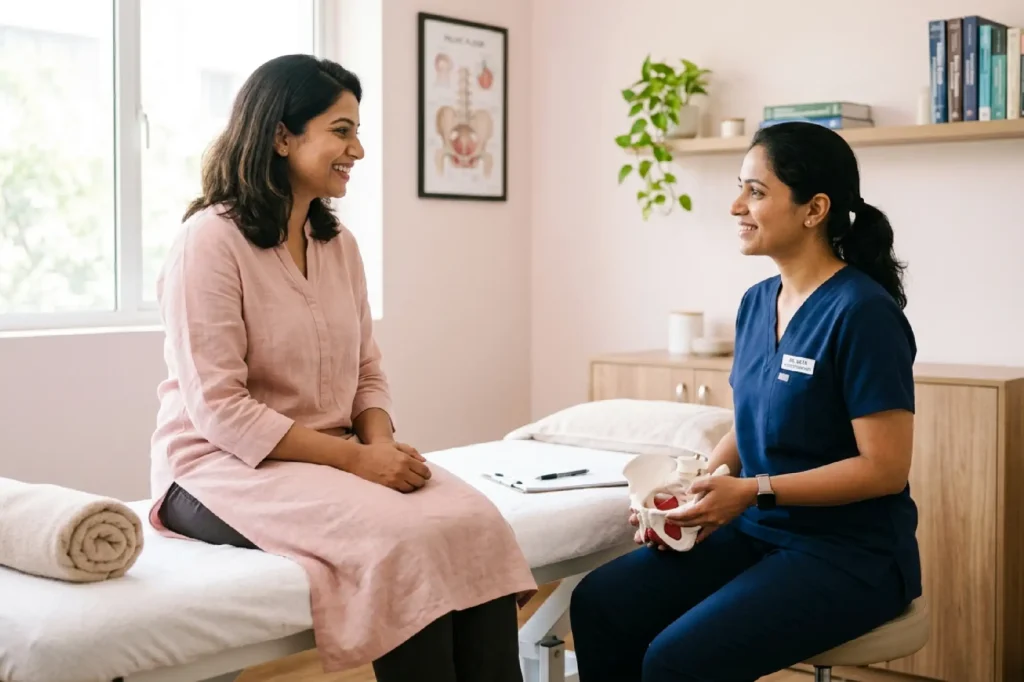

Pelvic pain can originate from several structures — the pelvic floor muscles, the joints connecting the pelvis (such as the sacroiliac joints or pubic symphysis), surrounding ligaments, or the lower back and hip muscles that support the pelvis. It can be sharp and localized, or a more generalized ache that shifts with activity, posture, or time of day. Because so many structures are involved, pelvic pain often needs a broader assessment than just the site where it hurts.
Pelvic pain can present in different ways, including:
Deep aching or pressure in the lower pelvis or lower abdomen
Pain that worsens with standing, walking, or prolonged sitting
Discomfort around the pubic bone, especially during pregnancy or postpartum
Pain or tenderness near a C-section scar, even weeks or months after delivery
Pain that radiates to the lower back, hips, or inner thighs
Pain that comes and goes, or fluctuates with activity levels
Many women ask, “why does my pelvis hurt after pregnancy?” — the honest answer is that there are several possible contributing factors, and identifying which apply to you is part of a proper assessment.

Pregnancy places significant load on the pelvic joints and ligaments, which can lead to ongoing discomfort well after delivery if the surrounding muscles haven’t fully regained strength and coordination. A C-section involves cutting through several layers of abdominal tissue, and scar tissue that forms during healing can sometimes restrict movement or contribute to pain, including pelvic pain after a C-section. Chronic pelvic pain unrelated to childbirth can stem from muscle imbalances, pelvic floor overactivity, postural habits, or prior injury. Because pelvic pain is rarely caused by just one factor, an individualized assessment is more useful than a general explanation.
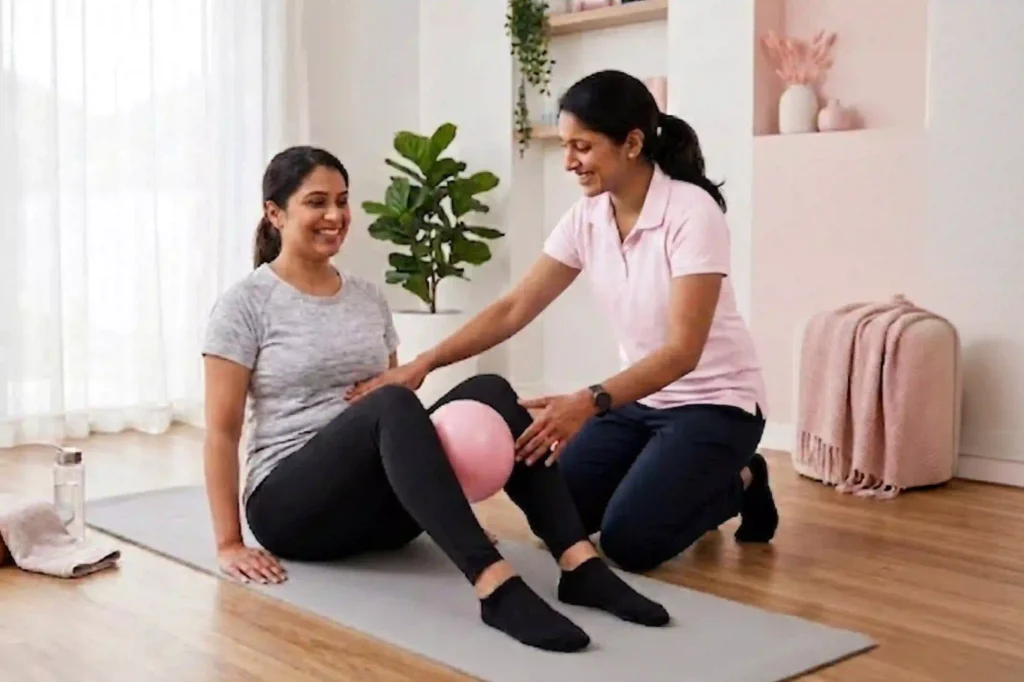

A physiotherapist can assess movement patterns, pelvic floor function, scar tissue mobility (where relevant), and joint alignment to understand what may be contributing to your pain. Depending on findings, this may involve manual therapy techniques, guided exercises to improve strength and coordination, scar tissue management after a C-section, and postural or movement adjustments for daily activities. Treatment is individualized, since chronic pelvic pain physiotherapy looks different depending on whether the underlying issue is muscular, joint-related, or connected to pelvic floor function.
An initial visit generally involves a detailed conversation about when your pain started, what makes it better or worse, and any relevant pregnancy, delivery, or surgical history. Depending on your symptoms, a physical assessment may be recommended, which could include an evaluation of the pelvic floor, abdominal region, or C-section scar if applicable. This is always explained clearly beforehand, carried out with sensitivity to your comfort and privacy, and only proceeds with your understanding and consent.
An assessment may be worth considering if you're experiencing pelvic pain during or after pregnancy, ongoing discomfort around a C-section scar, ongoing pelvic pain that hasn't been clearly explained, or pain that's affecting your ability to move, sit, or stay active comfortably.
Pregnancy and delivery place significant strain on pelvic joints, ligaments, and muscles, and it can take time for these structures to regain strength and stability. An assessment can help identify the specific contributing factors in your case.
Yes — physiotherapy for pelvic pain after a C-section may include gentle scar tissue management and guided exercises, depending on your recovery stage and assessment findings.
It typically involves an assessment of pelvic floor function, joint mobility, and movement patterns, followed by an individualized plan that may include manual therapy and targeted exercises.
No. Pelvic pain can also result from muscle imbalances, joint issues, or prolonged postural strain unrelated to pregnancy or delivery.
This depends on your delivery type and recovery, and a physiotherapist can advise on appropriate timing based on your individual situation.
If you’re experiencing pelvic pain, whether during pregnancy, after childbirth, or without a clear cause, you can contact Shakthi Women’s Physiotherapy in Chennai to discuss an assessment.
The information on this page is intended for general educational purposes and does not replace an individual assessment or professional medical advice.
Dedicated to empowering women through specialized physiotherapy care. We provide compassionate, evidence-based treatment for all stages of a woman’s life.
© 2026 Shakthi Women’s Physiotherapy ❤︎ Made with in Chennai
Dedicated to empowering women through specialized physiotherapy care. We provide compassionate, evidence-based treatment for all stages of a woman’s life.

© 2026 Shakthi Women’s Physiotherapy. Made with in Chennai